

Pearl knowledge precisely presented
Pearls are, and will remain, our great love. Over many years, we have acquired a great deal of background knowledge about pearls. We want to share the most important insights with you here.
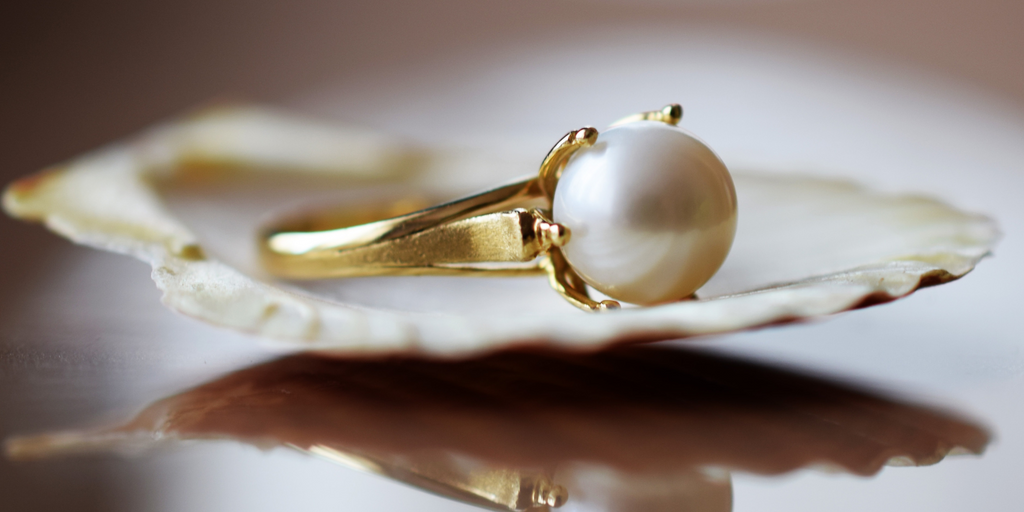
Pearls are, and will remain, our great love. Over many years, we have acquired a great deal of background knowledge about pearls. We want to share the most important insights with you here.
Pearls are unique pieces of jewelry. For thousands of years, people have been fascinated by how a mussel can produce something as beautiful as a pearl from intruding foreign bodies. But that is not the only reason why pearls are so popular. They are so versatile in shape and color that they can adapt to any fashion. There are, for example, the particularly large South Sea pearls in silver-white, champagne, or light rosé. Or the gray to obsidian-green Tahitian pearls with their impressive, unmistakable luster. The shimmering, white Akoya pearls are among the best-known pearls. They are particularly uniform and lustrous. Due to their variety, pearls can be combined in endless variations. They harmonize with gold as well as with silver or leather. That is why, in addition to classic pearl necklaces, there are countless other jewelry creations, as a look at our online shop shows.
In recent years, pearls have been found in graves in the Arab world that are more than 7500 years old. The fascination with genuine pearls has therefore existed for many millennia. In ancient times, pearls were highly coveted, also due to their rarity. In many cultures, they had a symbolic character. Pearls were associated with virginity, love, and romance, for example, but also with wealth, dignity, wisdom, or devotion to God.
Nowadays, almost all available pearls are cultured pearls. On the one hand, this is simpler, and on the other hand, it's also better for the environment. To find naturally occurring pearls, one would have to kill countless mussels, and only very few produce pearls. In pearl farming, small beads are inserted into the mussels, from which they gradually form pearls. The mussels lie on special underwater racks for several months or even years until the pearls can finally be harvested. Various species of mussels are used for this, for example, the pearl oyster species Pinctada maxima. Cultured pearls can be cultivated in freshwater and saltwater, and like natural pearls, they come in colors such as white, gray, pink, black, and cream.
Jewelry made from real pearls cannot be compared to artificial jewelry or even glass pearls. The biggest difference lies in what is called "luster." This is the pearly sheen of a natural pearl. Because the pearl consists of many individual layers of nacre, light refracts in a very special way, creating a multi-layered shine. In contrast, with synthetically produced jewelry pearls, only the outermost layer shines, which peels off after extended wear. Another special feature is the individuality of real pearls. No two pearls in a strand or necklace are alike; each pearl is unique. That's why jewelry made from real pearls is incomparably beautiful. The feel of wearing a real pearl necklace is incomparably pleasant.
Due to their layered structure, real pearls have a slightly rough surface, whereas fake pearls are smooth. You can tell this by rubbing two pearls together. If they slide smoothly past each other, they are fake. Tip: If you only have one pearl, you can gently rub it against your teeth to determine the texture of the surface.
Besides the surface, the color and luster of fake pearls are also tell-tale signs. Hold the pearl against a light source and examine it closely! In a real pearl, the shine and color extend deep into the pearl. Additionally, a shimmer of color appears to float slightly above the surface. This is called orient or overtone. Fake pearls, on the other hand, do not shimmer in such a multifaceted way. Their luster and color are only superficial.
The price of pearls depends on many different factors, such as their size, color, surface quality, nacre thickness, and shape. Perfectly round pearls, for example, are particularly valuable, although very irregular pearls (e.g., Keshi pearls) are also popular. Perfect pearls can fetch very high prices. Sometimes individual pearls are worth several 100,000 euros. Saltwater pearls (e.g., Tahitian pearls, South Sea pearls, or Akoya pearls from Japan) are more expensive than freshwater pearls. This is because only one pearl can grow in saltwater mussels, while up to 30 can grow simultaneously in freshwater mussels. To reliably estimate the value of your pearls, it is best to visit our pearl specialist center in Vöcklabruck.
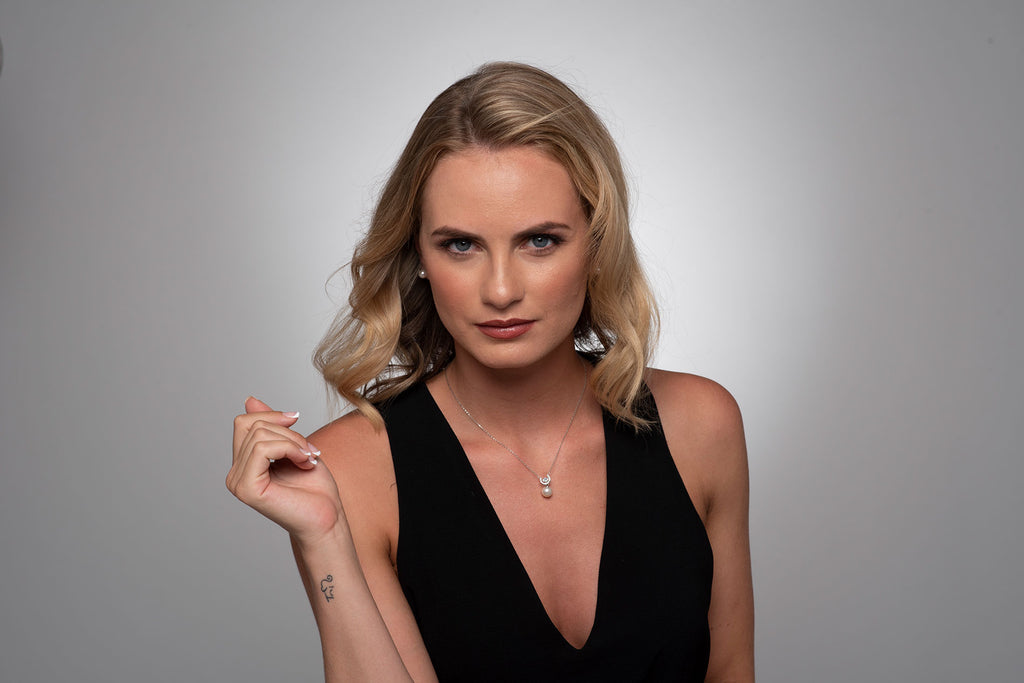
Akoya Pearl: This is a type of saltwater pearl. We distinguish between Japanese and Chinese Akoya pearls.
Biwa Pearl: A type of freshwater pearl, originally from Japan, which typically has a corn-kernel shape
Conch Pearl: One of the most expensive pearls, which occurs exclusively naturally and has a slightly reddish color. It is formed in the Queen Conch sea snail. A single, medium-sized conch pearl can cost up to € 200,000.
THE PEARL: Our family business, founded in 1998, focuses exclusively on genuine pearls and thus lives up to its slogan: Genuine pearls – genuine joy
Test for authenticity: It's very simple: Rub a pearl against your incisor. If the resulting sensation is unpleasant, like rubbing a stone against your tooth, then your pearl is genuine.
Color: The color of saltwater pearls ranges from white to gray, gold, and black. Freshwater pearls are white to peach-colored when harvested, but are often dyed, so any desired color can be achieved.
Specialist Advisors: That's what we call our staff who are on-site for you and live up to their title, because product knowledge is our top priority.
Size: The size of a pearl largely determines its price. It can be assumed that the larger the pearl, the more expensive it is. However, even very small saltwater pearls with a diameter of less than 1 mm are very expensive.
Graduated Pearl Strands: This term refers to necklaces that feature a large pearl in the center, with the pearl size decreasing, or tapering, towards the edges.
Healing properties: In Chinese medicine (TCM), pearls, and especially pearl powder, are used. It is said to have anti-inflammatory, detoxifying, and relaxing effects.
Irregular Pearls: This term refers primarily to freshwater pearls with larger diameters that are completely misshapen.
Anniversary: The 30th wedding anniversary is known as the "Pearl Anniversary." For this anniversary, pearls should definitely be given as a gift.
Kasumiga Pearl: A type of Japanese freshwater pearl that exhibits a delicate pink to rosy natural color.
Keshi Pearl: This is what cultured saltwater and freshwater pearls are called that have no nucleus and thus come closest to a natural formation. They are almost never round.
Luster: This term refers to the glow, the reflective quality of a pearl, and thus the most crucial determining factor for its value. The better the luster, the more expensive the pearl.
Share blog posts, products, or promotions Mabe: Is a type of pearl where a semi-circular bulge of a shell is cut out and filled with a filler material on the back. Mabe pearls are mainly used for rings and earrings.with your customers. Use this text to describe products, share details on availability and style, or as a space to display recent reviews or FAQs.
Mikimoto: The Japanese Mikimoto is considered one of the fathers of modern saltwater pearl cultivation, which was invented around 1900.
Nucleus: This is what the core of a pearl is called, almost always a small bead made from a mussel shell, which is implanted into a mussel and onto which nacre is applied layer by layer.
Oriental Pearls: This term refers to naturally formed pearls, found in almost every emperor's or king's crown and of immense value. The value stems from the fact that, on average, a pearl can only be found in every 15,000th mussel.
Perfection: The perfection of pearls means that there are no indentations or bulges, and no pale and/or dull spots visible on the pearl. It is also important that in necklaces, the size of all pearls is completely uniform, except for graduated pearl strands.
Care: Pearls want to be worn and do not tolerate chemical influences or perfume. After wearing, we recommend gently wiping a necklace with a soft cloth. High-quality pearl necklaces should be checked by us every 2 years and restrung if necessary.
Queen Elizabeth: She was quite simply synonymous with wearing pearls. Her three-strand saltwater necklace, which she wore to almost all official occasions, is particularly famous.
Roundness: The roundness of pearls is an essential value characteristic alongside the luster, perfection, and size of the pearl, whereby the rule is: the more perfectly round, the more expensive.
Saltwater Pearls: In cultivation, a pearl is created from a mollusk, the so-called pearl oyster, by implanting a nucleus and mantle tissue from a foreign mollusk.
Freshwater Pearls: Up to 30 pearls can form in a single mussel here.
South Sea Pearls: Known as the "Queen of Pearls," they are typically white with a metallic sheen and are formed in the Pinctada maxima oyster, which can have a shell diameter of up to 30 cm. The size of these pearls starts at 10 mm and can reach up to 20 mm. The classic white South Sea pearl is primarily cultivated in Australian waters. A more recent form of South Sea pearl is the gold-colored variety from Philippine waters. Other new cultivation areas include Vietnam and Thailand.
Tahitian Pearl: This type of pearl is formed from a special oyster, the black-lip oyster (pinctada margaritifera), and is sometimes referred to as a black pearl. The colors range from light gray to obsidian green to almost black. Here too, the size is between 10 and 20mm
Redesign: Very often, customers come to us with pearl necklaces that they haven't worn in a long time, or that they inherited or received as a gift. We offer free consultations for redesigning your piece of jewelry, so you'll enjoy wearing it again.
Processing: Pearls can be processed in any conceivable way and harmonize with yellow or white gold, as well as with silver, semi-precious stones, and even diamonds. Your wishes will be transformed into reality by 2 goldsmiths.
Growth characteristic: This is our charming term for a less-than-perfect roundness, a bulge, or an indentation on a pearl's surface.
Xi Yeung, whose first name is Grace, is a woman from Hong Kong who has been with us since the beginning, bringing incredible expertise as well as being truly ingenious with her craftsmanship. Watching her string pearls is a revelation. Professionals like Grace are recognized by the effortless ease of their work, which nonetheless cannot be surpassed in perfection.
Cultivation Areas: Freshwater pearls are almost exclusively cultivated in China today.
Saltwater pearls: Japanese Akoya pearls, Chinese Akoya pearls, South Sea pearls predominantly and of the highest quality in Australian waters, golden pearls in Philippine, occasionally also in Vietnamese and Thai waters. Tahitian pearls around the Tahitian atolls.
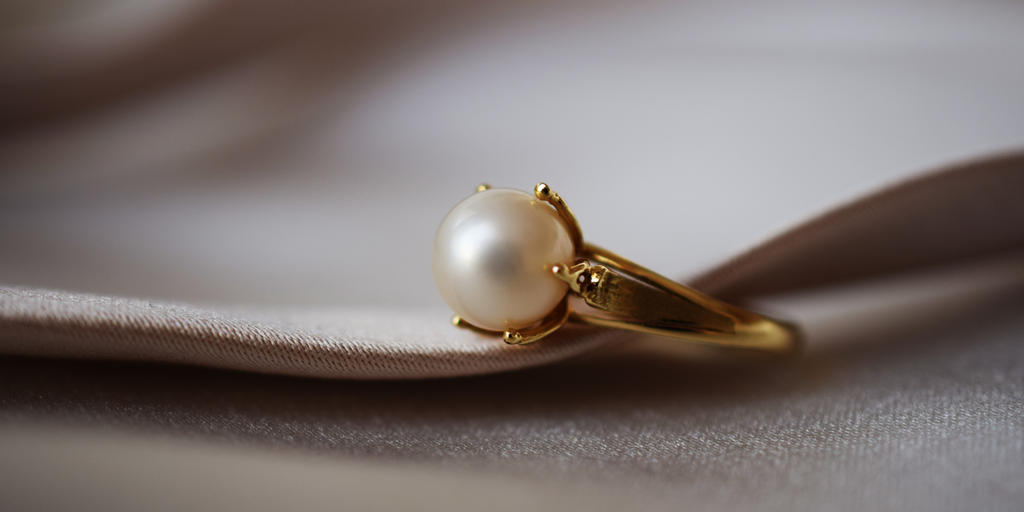
Real pearls are simply timeless and beautiful. No wonder pearl jewelry has been so popular for many generations. However, proper care is important to ensure you enjoy your piece of jewelry for a long time. We explain how you can gently and thoroughly clean pearls and how to properly protect them in everyday life.
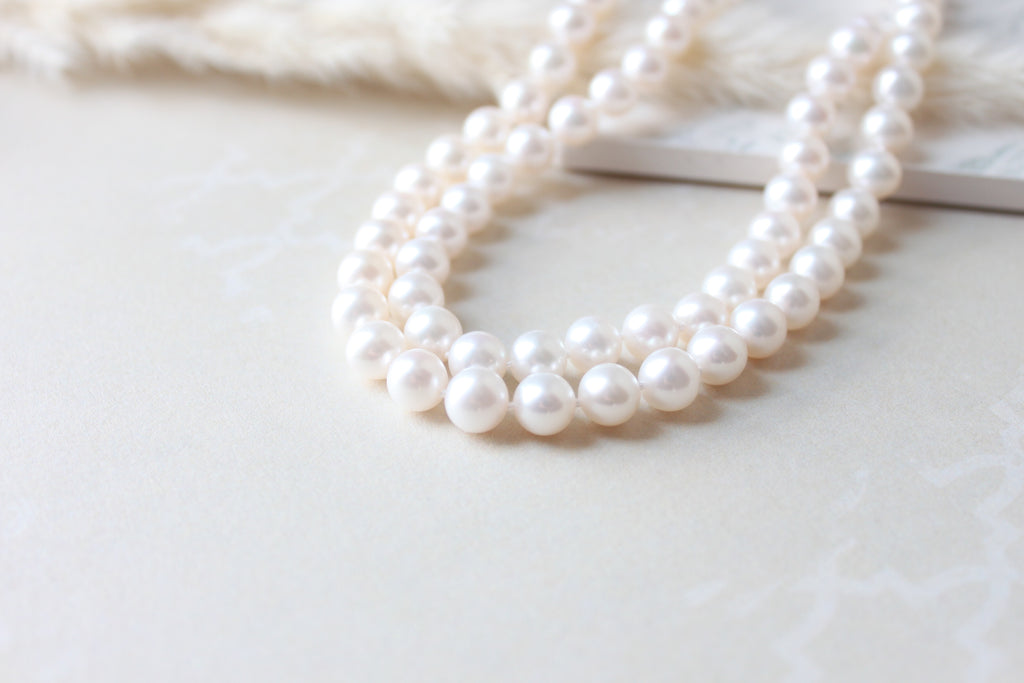
Jewelry and accessories can completely change an outfit and should therefore match the wearer and current trends as well as possible. We present the most beautiful jewelry trends of 2022. Baroque and Keshi pearls, large chains, striking earrings, and other trends are already indispensable on the runways. Here are the most important jewelry trends for the coming months.

